India’s agriculture is not just an economic activity — it is the heartbeat of rural life. Yet, for decades, the sector has suffered from uneven growth, water scarcity, post-harvest losses, and limited market access. To bridge these long-standing gaps, the Government of India recently introduced the Pradhan Mantri Dhan-Dhanya Krishi Yojana (PMDDKY) — a far-reaching initiative that aims to transform farming at the grassroots level.
Unlike earlier schemes that focused on single issues like irrigation or crop insurance, PMDDKY is designed as a comprehensive, district-based development program, blending technology, credit, water, and infrastructure into one unified mission.
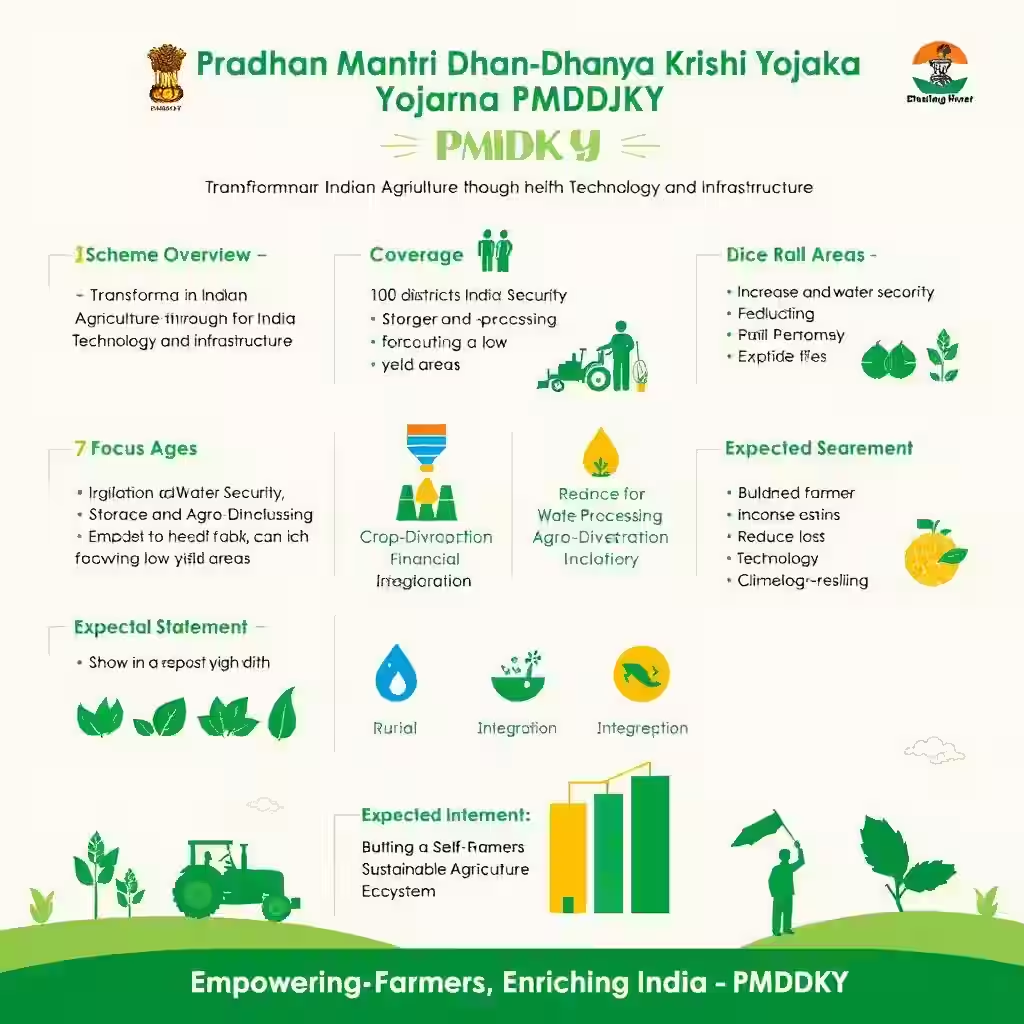
The Vision Behind PMDDKY
The name “Dhan-Dhanya” translates to “Wealth and Prosperity” — symbolizing the government’s commitment to building both economic and food security for India’s farmers. The program seeks to:
- Modernize and diversify traditional farming systems.
- Enhance the productivity of low-performing districts.
- Strengthen water and soil management.
- Improve post-harvest handling and storage capacity.
- Empower small and marginal farmers through easier access to credit and technology.
At its core, PMDDKY is not merely an agricultural support scheme — it is a strategic rural development blueprint intended to make farming sustainable, profitable, and resilient to climate challenges.
Structure and Coverage
PMDDKY is a six-year integrated mission that covers 100 districts across India, chosen for their low crop yields and limited agricultural infrastructure. Each district will prepare a District Agricultural Development Plan tailored to its specific climatic, soil, and economic conditions.
The central and state governments will jointly finance and monitor the plan, ensuring flexibility in addressing local challenges — whether it’s improving irrigation in Rajasthan, setting up cold storage in Jharkhand, or promoting organic farming in Himachal Pradesh.
Major Focus Areas of the Scheme
- Water and Irrigation Security
- Expansion of micro-irrigation through drip and sprinkler systems.
- Rejuvenation of ponds, canals, and village water bodies.
- Smart water budgeting to ensure sustainable use in arid zones.
- Infrastructure for Storage and Processing
- Establishment of rural godowns, cold storage units, and food processing hubs.
- Encouraging farmer-producer organizations (FPOs) to operate small-scale agro-industries.
- Promoting value addition so that farmers earn more from the same produce.
- Credit and Financial Inclusion
- Simplified credit processes through cooperative and rural banks.
- Linking farmers with Kisan Credit Cards and digital payment systems.
- Training programs for financial literacy and digital transactions.
- Crop Diversification & Sustainability
- Promoting climate-resilient crops, millets, and pulses.
- Reducing over-dependence on water-intensive crops.
- Integrating livestock, fisheries, and horticulture with crop farming for steady income.
- Technology & Innovation
- Digital dashboards for real-time data monitoring.
- Soil health mapping, weather-based crop planning, and satellite support.
- Encouraging young entrepreneurs and agritech start-ups in the rural ecosystem.
Why This Scheme Is Different
PMDDKY takes a “district-centric” approach, something that earlier national programs rarely did. Instead of applying one policy model across the country, it lets each district craft its own agricultural revival strategy.
For example:
- A drought-prone region may prioritize water harvesting.
- A coastal district might focus on fisheries and allied activities.
- A tribal area may invest more in forest-based livelihoods or millet farming.
This localized model ensures that every rupee invested brings measurable results and empowers local governance structures to act effectively.
Expected Outcomes
If implemented efficiently, PMDDKY could reshape rural India in the following ways:
- Increase in productivity of key food grains and cash crops.
- Reduction in post-harvest losses through better storage and logistics.
- Doubling of farmers’ income, especially for smallholders.
- Improved credit penetration and fewer loan dependencies.
- Employment generation in rural industries and agro-processing sectors.
- Balanced regional development, reducing disparities between high- and low-yield districts.
Potential Challenges
Even with strong intent, large-scale agricultural schemes often face hurdles. PMDDKY’s success will depend on:
- Efficient coordination among multiple ministries and state departments.
- Timely fund utilization and avoidance of bureaucratic delays.
- Training and awareness among farmers to adopt new methods.
- Climate unpredictability can disrupt even the best-planned programs.
- Monitoring and accountability at the district level to prevent leakages.
To overcome these, the government plans to use digital monitoring dashboards, third-party audits, and data-driven performance indicators.
Broader Impact on India’s Agricultural Future
PMDDKY aligns perfectly with India’s long-term goals of food self-sufficiency, climate-smart agriculture, and rural economic revival. By investing simultaneously in infrastructure, credit, and sustainability, it lays the groundwork for:
- A self-reliant farming system less dependent on external subsidies.
- A tech-driven rural economy that attracts youth back to agriculture.
- A diversified agri-export basket, boosting India’s position in the global food chain.
The scheme also supports national missions like the Digital Agriculture Mission, PM Krishi Sinchai Yojana, and PM Formalization of Micro Food Processing Enterprises (PM-FME) — ensuring all programs complement rather than duplicate each other.
Conclusion
The Pradhan Mantri Dhan-Dhanya Krishi Yojana represents a turning point in India’s agricultural policy — from fragmented subsidies to a holistic transformation plan. Its true success will be measured not in budgets or statistics, but in the lives of farmers who gain steady incomes, secure water, fair markets, and renewed confidence in farming as a dignified profession.
By linking innovation with inclusivity and tradition with technology, PMDDKY holds the promise to make India’s agriculture not just sustainable — but truly prosperous.